


Photography
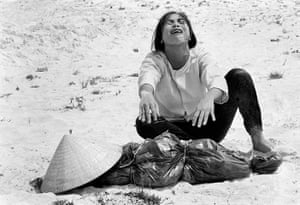
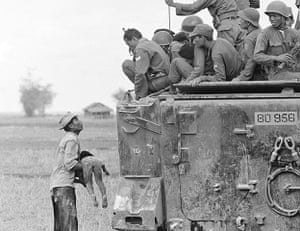
Documentary photography is a type of photography that is used to show events or environments. This type of photography gives us an accurate approach of people, objects, places and events. An example of Documentary photography is war photography. Horts Fass is a photographer who is know for taking war photography. His photos helps showcase events of the past to show the true reality of war. These photos allow us to see the toll war had on peoples lives. Faas idea when taking these photos was to help people see the reality of war. In the two photos i have selected we can see a lady mourning over a dead body which has been wrapped up. In the second photo we can see a man carrying a child who appears to be dead in front of a tank filled with soldiers. Both of these photos help document the effect war has on families which is a side we don’t always see. In my opinion i think the fact that the photos were shot in black and white helps allow the photos to become more powerful due to them allowing the audience to focus on the image as a whole rather than potentially getting distracted by colour and missing parts of the photo
Another photographer i chose to study is Tish Murtha. Tish is a photographer who shoots social documentary photography. The photos of hers that I’ve chosen to analyse are photos that help document Social realism of marginalised communities of the working class life. The first photo of Tish that i have chosen to talk about is a photo called ‘Youth Unemployment’ This photo was taken in 1981. In the photo we can see a young man sitting in a building with his arms hanging out of a window frame which appears to have the glass missing. I think this photo is very powerful in documenting poverty in the working class. This photo could also help connote loneliness to due the person in the photo appearing sad and alone. The use of the the black and white also helps add to the felling of loneliness due to grey usually being a colour that contrasts loneliness. Another photo by Tish which is called ‘Juvenille Jazz Bands’ is another photo that helps document poverty of working class communities in the 80’s. In this photo we can see a few kids sitting around playing with each other however in the background we can also see more kids attempting to tip over a car. This photo is able to show us the affect unemployment had on youths in the 80’s and the effect it had on behaviour. This photo could lead to us suggesting that due to the unemployment in the 80’s it lead to kids causing mischief due them not having anything else to do as the were also a part of the working class community.
In my opinion i think that both of these photographers have successfully documented particular events which can be used as a record to see how things have changed and to also be used as a way to compare realities as the years have gone on. I believe the fact that both these photographers chose to shoot in black and white also allow the photos to be more powerful as it allows the viewers to be able to see the image as a whole rather than getting distracted by colours or for other colours to potentially over power a certain point in the photo making the meaning of the photo change or causing the photo to not be as strong. After thinking about the aim of what both these photographers tried to achieve i think they both successfully achieved these whilst also creating a deep meaning to the photos which is sometimes hard to do.
Horst Faas- War photographer
Tish Murtha- Social documentary photographer documented Social realism, Marginalised communities and Working class life.
Tish Murtha. 2016. Tish Murtha. [ONLINE] Available at: http://www.tishmurtha.co.uk/about-1.html. [Accessed 25 November 2020].
https://www.theguardian.com/artanddesign/gallery/2012/may/11/photographer-horst-faas-in-pictures


My expectations and hopes for the shoot was to take photos that relate to Covid-19 and help reflect the new normality in which people have to wear masks and use hand sanitiser.
I planned my shot by ensuring i had the correct equipment that i needed such as my camera. I also brought along some props to help me successfully achieve the theme of the photoshoot. The props i included were face masks and hand sanitiser. When shooting my photos i also used studio lighting which helped add a more professional effect to the photo and also helped allow the pictures to come out clearer and stopped the photos from being too over exposed.
When shooting i managed to capture a few successful photos which were the photos i had hoped for.
When shooting I originally had to change the camera I had hoped to use due to my original camera bot working with the lighting
There are a few requirements you need to consider when becoming a professional photographer.
One skill you’ll need to become a professional photographer is to have a creative and technical ability. Having both a creative and technical ability helps you to come up with idea to shoot and also allows you to take photos with good angles and techniques which helps show you know how to use the camera technical functions. Having a creative mindset in photography helps you to create emotion in the photos you’re taking which helps add meaning to them.
To be a professional photographer you need to also have patience and to be able to concentrate. This is a very important skill to have due to the fact that not all photo will come out how the photographer may have planned meaning their may be multiple attempts before they successfully achieve what they hoped for.
A professional photographer should also have a good eye and be able to pay attention to detail. This is a good factor to have as it allows you to find photo opportunity in small things and with objects people may not have paid attention to which then helps allow your photo to become unique. It also helps you take notice of small details in your photo that may have gone wrong and could end up being a distraction. Being able to do this also allows you to evaluate what may have gone wrong in the photo allowing you to change it.
Professional photographers should also have strong networking skills. This is because it helps allow more people to see you’re work. This also allows you to connect with more people and potentially gain more clients for yourself and any future work you plan on doing. Networking can also lead to you finding out about more opportunities you may not have known about previously.
Professional photographers should also know how to complete risk assessments before every shoot. This is to ensure that the photographer isn’t putting themselves at risk as well as a potential client who may be shooting with them. They do this by finding any potential risks that they could face and finding a solution to eliminate it to keep themselves safe.
Professional photographers also need to ensure they know how to complete consent and permission forms. They need to do this by ensure they have written consent from a model they may be shooting and also written consent to use a certain location in a shoot that may be private property. This is very important to do because if neither of these are done they will have a big impact on your shoot and could lead to you facing legal issues.
Professional photographers also need to ensure they know how to complete image copyright forms to ensure that any photo they take will rightfully be theirs and cannot be stolen by other people. This also ensures no one else can use the photo without the photographers permission and if they do they will likely face legal issues.
Professional photographers are also required to know how to manage time. This is important as it allows the photographer to be able to discuss with the client times when they will be shooting and for them to also know what times of day are best depending on the type of lighting they would like to use.
All photographers have a different genre they excel in such Nature, Landscape, Portrait, Wildlife, Underwater photography, etc. This means a professional photographer is also required to have the skills to shoot in the specific area of interests they choose to shoot in.
When shooting their are a lot of procedures that need to be taken place to allow production to run smoothly and to ensure you don’t face future issues with your work. The four main key practices you have to ensure have been completed include a risk assessment, Consent and permission forms, Image copyright and NUJ code of conduct.
Risk assessments should be made when going to location shoots to understand the potential risks before going and to also help create a safety buffer to ensure that both you and your equipment is safe as well as anyone around you.
Consent and permission forms need to be completed before shooting your photos to ensure you have permission to shoot in a certain area or to include a model in your shoot to avoid legal issues and to also be certain that you can use your work in the future without potentially facing any issues.
Copyright practices and procedures have to be completed before shooting photos to ensure that all rights to the photos belong to you and to also help ensure your photos can’t be stolen.
For photographers such as journalists they have to ensure they follow the NUJ code of conduct which stands for National union of journalists. The NUJ code of conduct contains 12 rules that have to be followed these include:
I enjoyed this project because it allowed me to look at photos with a different point of view and to analyse them differently than i usually would. When starting of the analysis for the photos i decided to print them out and to stick them into my scrapbook so i was able to view them closely and create a mind map to allow me to analyse them better. I enjoyed being able to analyse photos this way as it allowed me to make notes as i went along.
Out of the photos i decided to analyse i enjoyed analysing Kris Graves photos the most due to them being more naturally unique as well as more beautiful. His photos also allowed us to see life at sea and how glaciers look which is photos are often not seen.
What i most struggled with within the project was finding different photographers. I also was sure whether or not i was supposed to use four separate photographer or four photos from one photographer. In the end i chose to choose four different photographers and analyse one of each of there photos.
Bibliography:
http://www.nationalgalleries.org. (n.d.). Fay Godwin. [online] Available at: https://www.nationalgalleries.org/art-and-artists/artists/fay-godwin.
Anon, (n.d.). The Ansel Adams Gallery. [online] Available at: https://www.anseladams.com/.
Hans Strand Photography. (n.d.). Hans Strand Photography. [online] Available at: https://www.hansstrand.se/.
+Kris Graves. (n.d.). Kris Graves Photographer. [online] Available at: https://krisgraves.com/ [Accessed 23 Mar. 2021].

Ansel Adams

The photo i have chosen is a photo taken at Cathedral Peak and Lake, Yosemite National Park, California, c. 1960 by Ansel Adams. In this photo we can see the lake at Yosemite national park as well as part of the cathedral peak. In the distance in the photo we can see a mountain with some tress next to it. Ive chosen this photo because i like how you can see such clear detail in it. I also like the fact that the photo was taken in black and white as it allows us to see the image as a whole and to focus on all the details rather than getting distracted by colours which wouldn’t allow us to see the photo as a whole. I also like the fact that the photo contains a lot of grey tones which helps allow the photo be more powerful and clear and allows us to differentiate everything in the photo. I like the way Ansel has been able to capture the true beauty of Yosemite through the use of one photo. I think the fact that Ansel has taken the photo as a long shot rather than a close up is very powerful as it allows us to see more than one aspect of Yosemite which helps to add more clear detail to the photo. Ansel has used a good use of composition in the photo as it helps allow things to become more framed and clear in the photo making it become more interesting. I think something i’d take away from looking at this photo and putting in to my work is to take more of my photos in black and white and to be more patient when taking my photos so i can get better details in them which helps them become more powerful and to also focus more on composition on my photos so the photo doesn’t appear over crowded meaning i can gain and show the true intention of my photos.
Fay Godwin

The photo i have chosen to talk about is a self portrait by Fay Godwin. In the photo we can see a lake in which Fays reflection can be seen. We can also see the sky and part of the land. I chose to analyse this photo because i again liked the fact the photo was shot in black and white. I like how the photo allows us to focus on the image as a whole than again potentially getting distracted by colour. I also really like how she captured the photo and was able to show her reflection in the water which helps add to the photo to show its a self portrait. I like that fact that by doing this it could create many meaning to people that view it. For example it could suggest she sees herself as lonely and that she could just ‘float away’. I think the grey tones in the photo is very impactful as it help distinguish the different features in the photo as well as bring the photo together. Fay has shown a good use of rule of thirds in the photo which can be seen through the top half of the photo containing the sky and the middle of the photo is the lake and then at the bottom we have both the shadow and the land. The photo has good composition due to it being empty which allow the viewers to see the photo as a whole and not get distracted if it was busy. I think something i’d want to change about this photo is making the shadow appear bigger however she may have done this intentionally to make herself appear small. Something i’d take from this photo is again shooting in black and white and by also taking more photos that contain nature as i think it’s a beautiful thing. Another thing i’d take into consideration when shooting my work is adding shadows to help create a different narrative to my photos and to also add a different technique than i usually do.
Hans Strand

The photo i have chosen to talk about is a photo taken at Voxnan river by Hans Strand. I have chosen to analyse this photo because i think it is a beautiful photo that has been shot amazingly well. In the photo we can see a river with waves between trees. We can also see an orangey coloured sky which suggest the photo was taken at sunset. The photo contains warm colours which helps create the mood of happiness and relaxation. I like how Hans was able to capture the waves in the photo as they move and was also able to capture what appears to be fog. This helps show the beauty of nature which is something i like to include in my photos as well as enjoy exploring. I think the composition of the photo could have been shot slightly better because the photo appears busy which means you have to really focus on the photo to see it as a whole and also have to pinpoint part of the photos to see what’s going on. I think the photo has however shown good use of rule of thirds by having three separate subjects when its split up. In the top we see the sky, in the centre we can see trees and then at the bottom of the photo we can see the lake. If i was to take anything from this photo it would be to take photos at the time of day in which the sky would give of warm tones to help give a welcoming feeling and happiness. I would also try and take photos that show more details of nature in them.
Kris Graves

The photo i have chosen to talk about is a photo that appears in the album Latency by Kris Graves. In this photo we can see a statue with a man riding a horse. There’s a photo of George Floyd being reflective on the main stand of the statue and BLM being reflected onto the horse. Around the statue there is also candles and graffiti. I chose this photo because i think it’s such a powerful photo that helped both highlight the issues of 2020 and to also help spread the awareness that black lives matter. Something i really like about this photo is that everything is dark around the statue but is very lit up on the statue. This helps show us what he important aspect of the photo is. I think this photo has a good use of composition due to it not being too crowded and allowing us to focus on the whole photo. The photo has been taken as a medium close up which allows us to get enough details when looking at the photo and to also understand the full context of it. something i’d take from this photo is to take more photos that spread awareness and to take more medium close and long shots when shooting documentary photos. I will also take more photos in colour when taking documentary photos to help get across the true issue im trying to show.


Fay Godwin
Fay Godwin was a British photographer who was born on the 17th February 1931 in Berlin, Germany. Fay was a self taught photographer. Fay was introduced to photography through family photos in the mid 1960s. She was influenced through her love of walking as well as her love of landscape photography
Ansel Adams
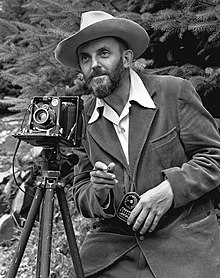
Ansel Adams was an American landscape photographer who was born on the 20th February 1902. He was born in San Francisco, California. Ansel is one of the most widely known photographer in the history of the United States. Ansel dropped out of school at 12 years old he then recieved his camera in 1916 and found out he was a talented photographer. Ansel first photo was taken at Yosemite National Park which led to the influence of his landscape photography

Hans Strand
Hans Strand is a Swedish landscape photographer who was born on the 29th November 1955. In Soderhamn Sweden. Hans has always felt drawn to the emotion and expressions that expression that he finds in nature.

Kris Graves
Kris Graves is an American Landscape and Portraiture photographer who was born in 1982 in New York. He recieved a BFA in visual arts after studying at S.U.N.Y purchase college.

There are four different of research these include Primary, Secondary, Quantitative and Qualitative.

Primary Research is research that you find out yourself from things such as Surveys, Observations, Focus groups, Interviews etc. There are problems that you may face when doing primary research such as you may upset the person you are interviewing which therefore makes your research unethical. Another problem is that people may lie when you ask them questions which therefore makes your research unreliable. Another problem you may face is people may not want to participate in your research which leads to the research becoming time consuming. An example of Primary Research is an Interview. This is when you sit someone down and ask them unstructured questions and they then have to answer. This type of research could face many problems. The first problem it may face is being unreliable as people may lie when answering questions. Another problem that could be faced is that it could be unethical as the person who’s asking the questions may ask a person question which upsets the person being interviewed which therefore leads it it being unethical. Another problem that could be faced is that people may not want to take part in the interview which could lead to the research being time consuming. However choosing a focus group for your research is very useful as i allows you to find a group that is only interested in what you’re studying so it makes the research easier to conduct and allows it to become more reliable. Primary research helps you to develop your ideas and work as it allows you to understand more about what you’re studying and to gain better knowledge for your work. This type of research can be used within a photographic projects as it allows you to gather information and find out what type of things people would like to see photographed in my work.

Secondary Research is research that has been done by somebody else. Types of secondary research are books, magazines, news, government research, blogs, the internet etc. Problems can be faced from this type of research such as the research being bias, unreliable or fake which means you have to find more than one source to gather your information to make sure it is true. This type of research can help you develop ideas as it allows you to gain a bigger understanding on what you’re trying to find out and it allows you to see what others also found out which helps widen your knowledge. This type of research can be very useful as it allows you get more than one persons views on a subject that you may be studying. This type of research is useful as it can also be more cost effective and potentially gives you more information to find. This type of research is useful in photographic projects because it allows to see what work has already been produced and gain ideas for my own work.
Quantitative research is research that include things such as surveys and questionnaires which helps produce statistics on the data with the use of bar charts, pie charts etc. Quantitative research creates numerological data. This type of research is useful because it creates statistical analysis which allows it to be easier read. This type of research can be useful in photographic projects because it allow me to obtain data on a certain subject to find out what area may be popular for me to then interpret it into my work.
Qualitative research is research that focuses on how people feel and how it impacts behaviour. This type of research is done through the use of focus groups, observations and action research. An advantage of this type of research is that its flexible and open ended which helps lead you to answers you may not have expected to received. This type of research can be useful in a photographic project can help me find out how people may feel about a certain topic and whether or not it would be considered unethical to showcase a certain event


 Chloe's Photography Blog